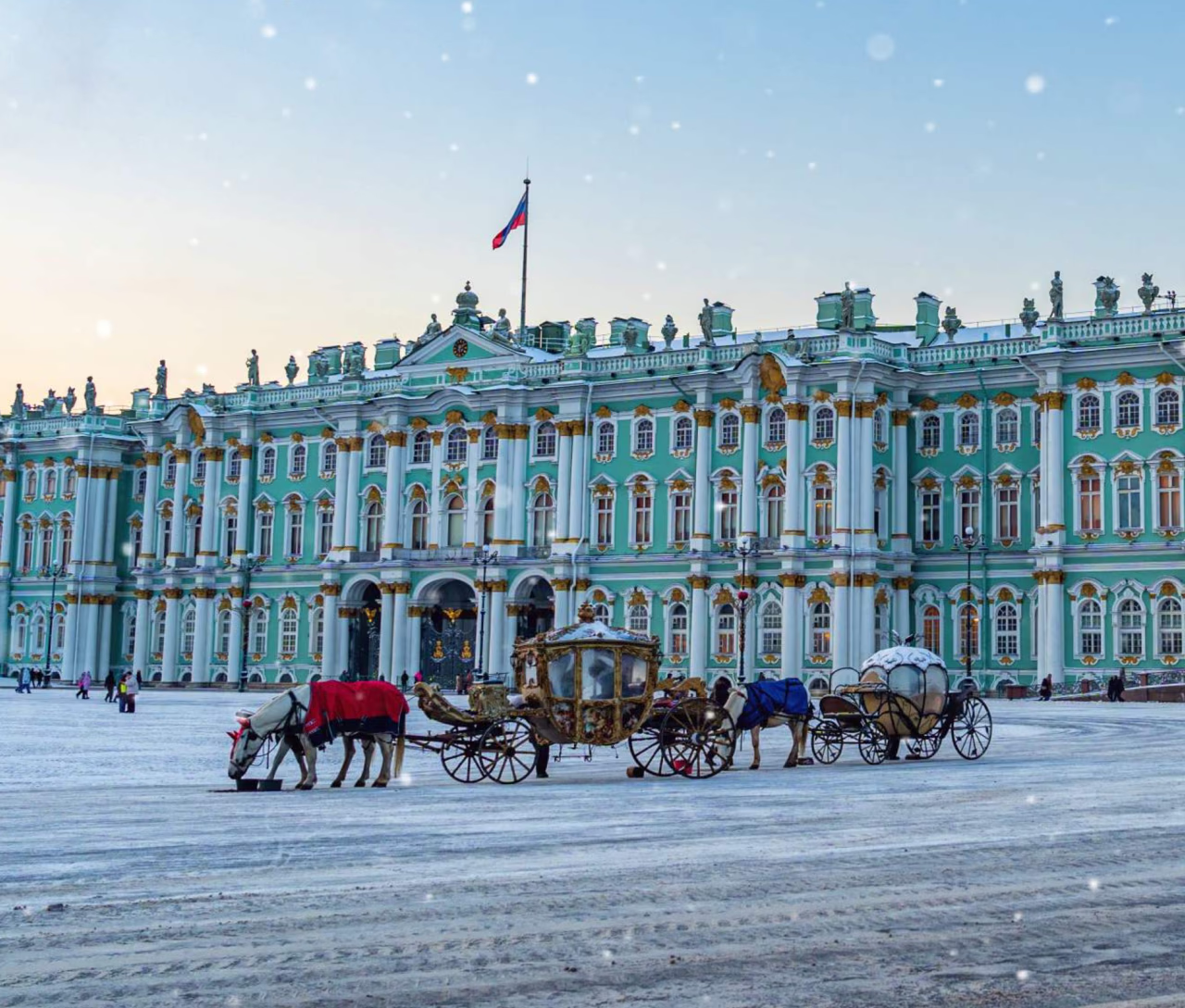
In the winter of 1941, in galleries where the temperature fell to forty below, curators of the State Hermitage led soldiers on tours of empty picture frames.
The paintings were two thousand kilometres east, packed into crates and sent to the Urals days before the German blockade closed around Leningrad. The frames stayed where they had always hung — deliberately, as a kind of vow. Guides described the brushwork from memory: the fall of light in a Rembrandt, the blue of a Madonna’s robe, the exact place on the canvas where a hand rested. Then the soldiers went to the front.
When the collection came home in October 1945, not a single object had been lost.
That is the Hermitage. It is a museum, but it is also a palace, an archive, a siege survivor, and — genuinely — a working cat shelter. Understanding that before you go is the difference between a visit and a forced march through twenty kilometres of corridor.
How big is it, really?
Big enough that comparisons help more than numbers.
| Museum | Exhibition space | Cataloged objects |
|---|---|---|
| State Hermitage, St. Petersburg | 66,842 m² | 3,000,000+ |
| Louvre, Paris | 72,735 m² | 600,000+ |
| Metropolitan Museum, New York | 58,800 m² | 1,500,000+ |
| Vatican Museums | ~55,000 m² | 70,000+ |
| Prado, Madrid | ~45,000 m² | 8,000+ paintings |
The Louvre is marginally larger on the floor plan. The Hermitage holds roughly five times as much — including the largest collection of paintings anywhere in the world.
The practical consequence: you cannot see it. Not in a day, not in three. A visitor who tries to walk every open room covers more than twenty kilometres. The people who enjoy the Hermitage are the ones who arrive with a shortlist and the discipline to walk past things.
And unlike a purpose-built gallery, the building is itself an exhibit. You are not in a neutral white box hung with imperial art — you are in the throne rooms, private libraries and chapels where the Romanovs actually ruled, and the art happens to be on the walls.
The two routes — choose before you buy
The Main Complex is split into two timed-entry routes. This is not a suggestion; your ticket admits you to one of them, and the choice shapes your whole visit.
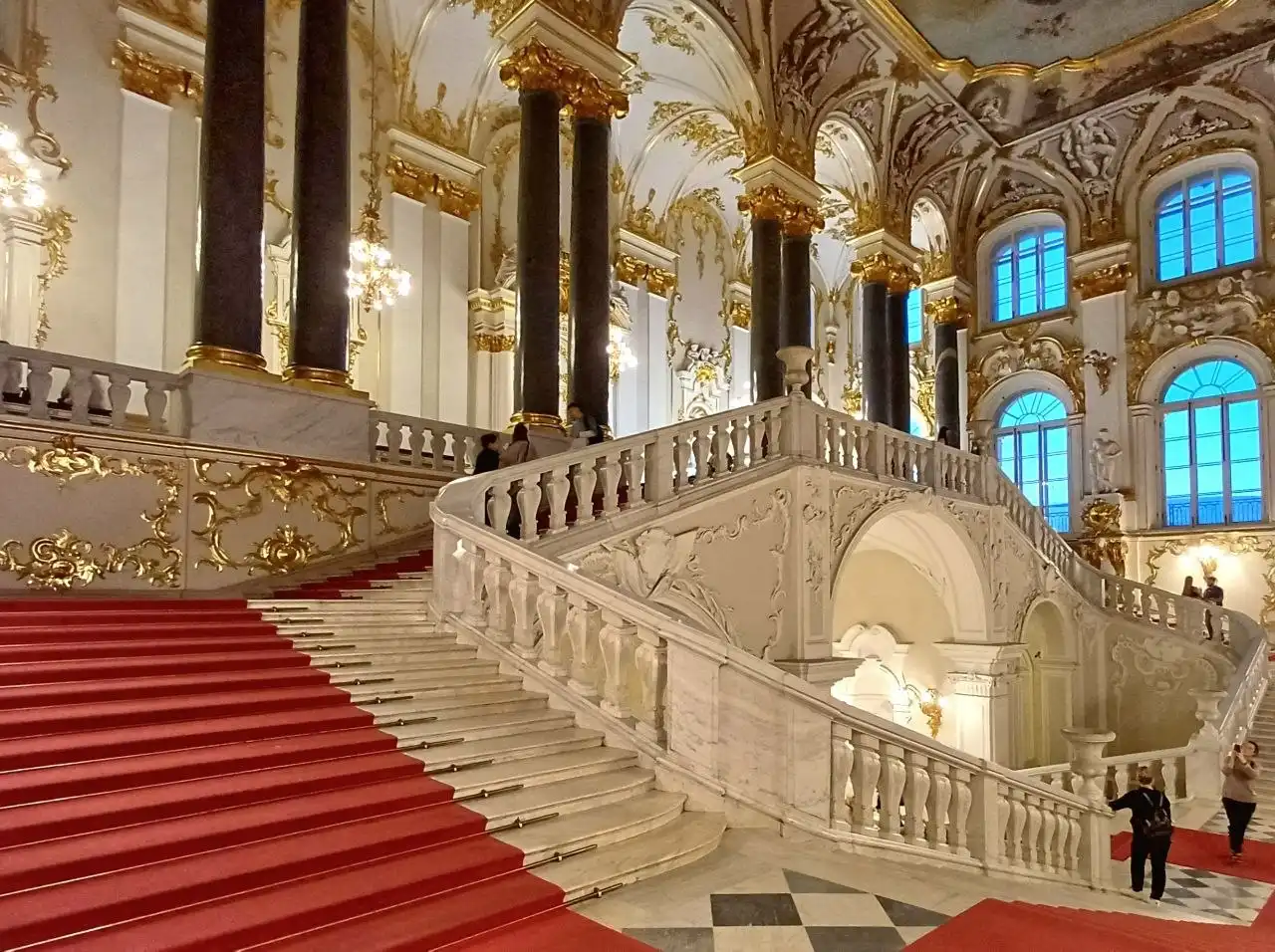 The Jordan Staircase
Route 1 — the classic. Enters by the Jordan Staircase and runs through the grand state rooms: St. George’s Hall, the Armorial Hall, the Military Gallery of 1812. Then into the European painting galleries — Leonardo, Raphael, Michelangelo, the Baroque, classical antiquity.
Take this one if it is your first visit. It is also the only route fitted throughout with lifts and stair-lifts, so it is the only option for anyone with reduced mobility.
Route 2 — the private apartments. Enters by the Church Staircase into the imperial family’s living quarters: the Malachite Room, the Gothic Library, the Pompeian Dining Room, plus the Russian, Oriental, French and British collections.
Longer, considerably quieter, and far more interesting on a second visit — this is where the palace stops being a stage set and starts feeling like a house. But there is no lift access at all.
What to actually stop for
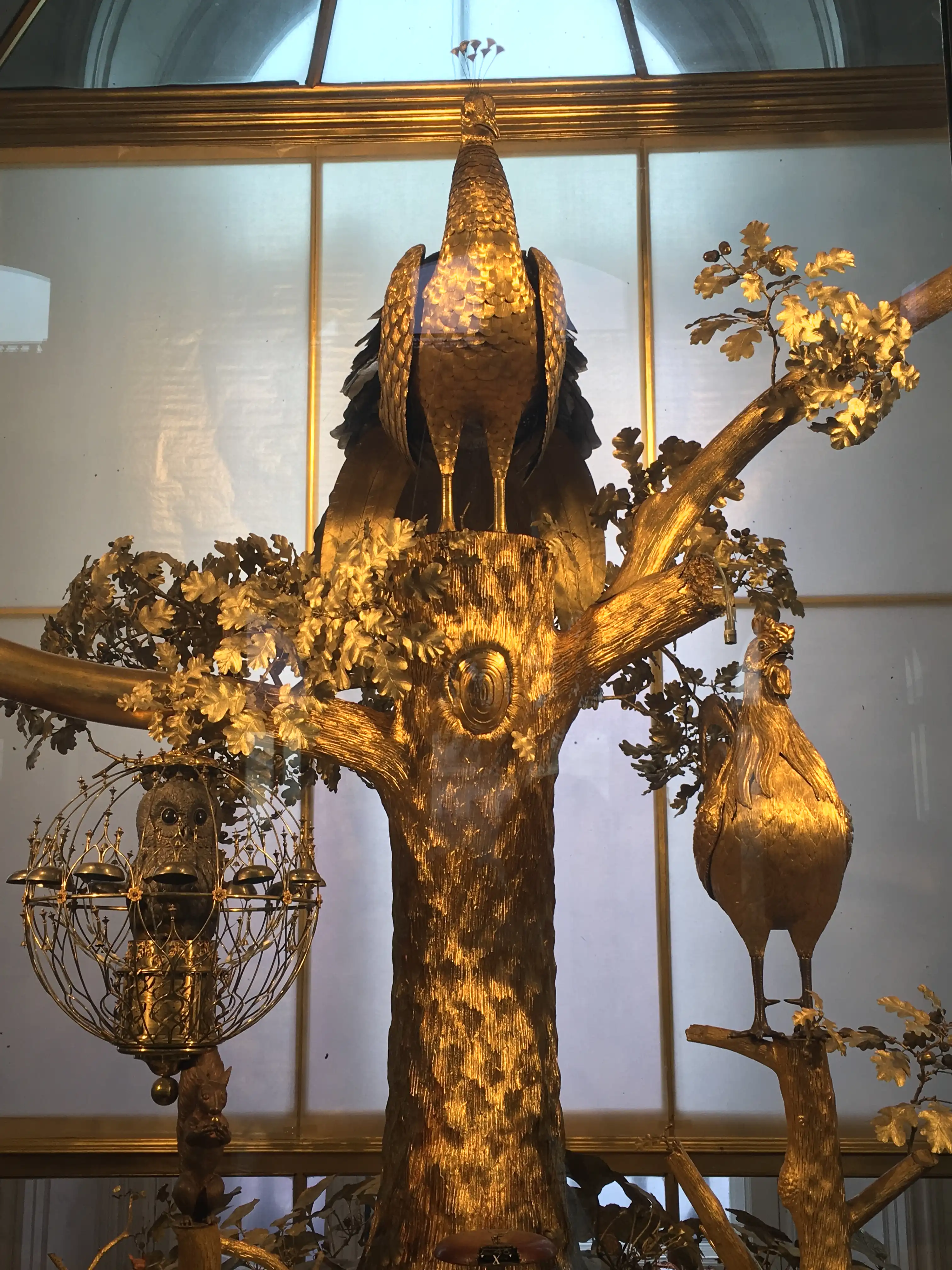 The Peacock Clock
A shortlist, in the order you are likely to meet them on Route 1:
- The Jordan Staircase — Rastrelli’s Baroque original, rebuilt by Stasov after the 1837 fire. Carrara marble, gilded stucco, grey granite columns. Most people photograph it and move on; it rewards five minutes of standing still.
- The Pavilion Hall and the Peacock Clock — Stakenschneider’s light-filled fusion of Moorish, Renaissance and Gothic. The clock is a mechanical automaton built by James Cox in the 1770s, and it still runs. Check the posted schedule for winding times.
- The Raphael Loggias — Catherine the Great commissioned an exact architectural copy of the Vatican original, down to all 52 frescoes.
- Room 214, Leonardo — two of the fewer than twenty surviving paintings attributed to him: the Benois Madonna and the Madonna Litta.
- Room 254, Rembrandt — The Return of the Prodigal Son, Portrait of an Old Man in Red, and Danaë, restored over twelve years after an acid attack in 1985.
- Room 128, the Kolyvan Vase — nineteen tonnes of green jasper, the largest single worked piece in the world. It was installed before the walls around it were finished, because it could never have fitted through a door.
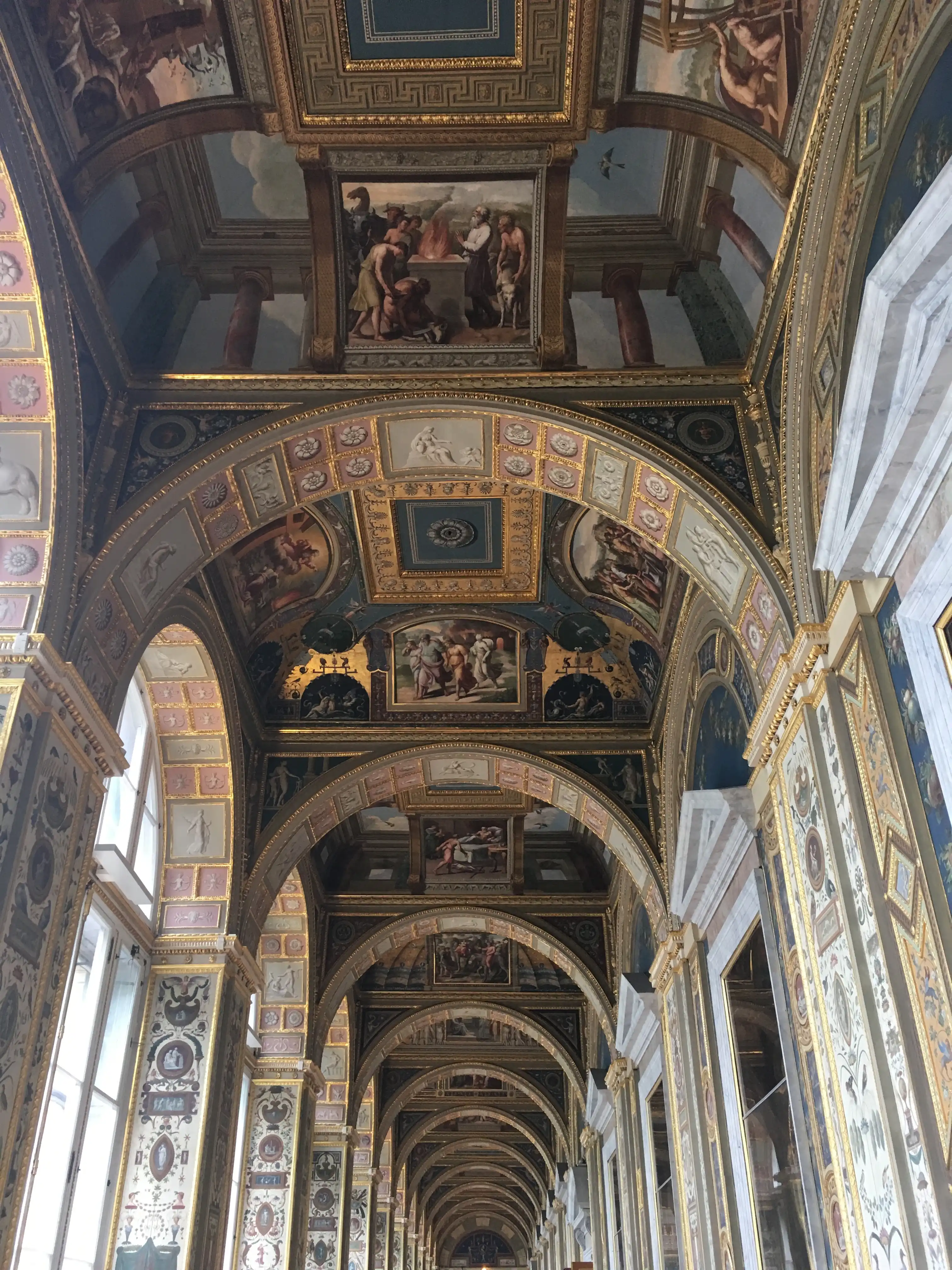 The Raphael Loggias
The cats
There have been cats in the Winter Palace for three hundred years.
Peter the Great brought the first one back from Holland — a cat named Basil, hired to deal with mice. The arrangement was formalised in 1745, when Empress Elizabeth Petrovna issued a decree that the best hunting cats of Kazan be delivered to the palace to break a rat infestation. Catherine the Great, who founded the museum proper in 1764, gave them the official rank of court cats and the run of the galleries.
They have held that position through a revolution, two world wars and the transformation of a royal residence into a state museum. The one break came during the 872-day siege, when the city’s animals did not survive the famine. Cats were brought back in afterwards — many of them Siberians, chosen for hardiness.
Fifty to seventy live there now, in the basements, courtyards and offices, looked after by dedicated staff and funded by sponsorships and donations. They are not on public display, but you will see them if you look, particularly along the embankment side.
The staff will tell you about the hermits — small magical creatures said to live in the walls, who come out at night and knit scarves from cat fur. Whether anyone believes this is beside the point.
Siege chocolate
The wartime story is worth knowing properly, because the building carries it.
Under director Iosef Orbeli, packing began in June 1941, around the clock. On 1 July an armoured train left with over half a million objects bound for Sverdlovsk. A second followed on 20 July with 700,000 more. When the blockade closed on 8 September, the remaining staff were trapped inside an unheated, shelled palace with 351 crates that had not made it out.
They lived in the cellars, which doubled as bomb shelters — damp, freezing, crowded with their families. They put out thousands of incendiary bombs on the palace roofs by hand, which is the only reason the building is still standing. And as the food ran out they boiled carpenter’s and restoration glue into a jelly. It set into dark rectangular blocks, so the city called it siege chocolate. The collagen in it kept people alive.
The empty frames stayed on the walls the entire time.
Planning your visit in 2026
Getting in
- eVisa — citizens of 60+ countries, including all EU states, China, India, Japan, Turkey, Saudi Arabia and Mexico. Applied for online, processed in 4 calendar days, $40 (free under 6). Valid 120 days from issue, single entry, 30 days maximum stay.
- Consular visa — required for the US, UK, Canada, Australia and New Zealand, which are not eVisa-eligible.
- Visa-free — Argentina, Brazil, Chile and several other South American and CIS countries, up to 90 days.
If you are on the consular list, start early. The invitation letter is the part that takes time, and it is the part we handle for our guests — see our visa support.
Money — read this before you fly
Foreign-issued Visa, Mastercard and Amex do not work anywhere in Russia. Not in shops, not in taxis, not at the museum. Arrange one of the following before you arrive:
Cash. USD and EUR exchange easily at bank branches. The catch is that notes must be pristine — no tears, no writing, no stamps, no heavy creasing. Russian banks routinely refuse imperfect bills or apply a punitive commission. Ask your bank at home for new notes specifically.
A MIR card. The domestic card network, and the cleanest solution if you are staying more than a few days. T-Bank has a desk on the ground floor of Pulkovo arrivals; Bank Globus is on the third floor near baggage claim. In the city, a Sberbank branch — the one at Dumskaya 1–3, next to Nevsky Prospekt metro, is used to foreigners — will open an account and issue a card in about thirty minutes. On Android you can then link it to Mir Pay.
A virtual card, for booking ahead. To buy timed-entry tickets before you leave home, set up a YooMoney virtual card or use the PayInRussia app. The latter lets you load up to 15,000 ₽ from a foreign credit card with no identity check, or up to 600,000 ₽ with verification, and then pay anywhere in Russia by scanning Faster Payments System (SBP) QR codes.
On the day
| Metro | Admiralteyskaya (line 5, purple) — 700 m, the fastest walk. Nevsky Prospekt (line 2, blue) — 900 m, the prettier one. |
| Hours | Wed, Thu, Sun 11:00–18:00 (last entry 16:00). Tue, Fri, Sat 11:00–20:00 (last entry 18:00). |
| Closed | Every Monday, plus 1 January and 9 May. |
| Timed entry | Arrive no more than 15 minutes early and no more than 30 minutes late, or the ticket is void. |
| Free entry | Under-14s of any nationality, always. Everyone on the first Thursday of the month, on International Museum Day (18 May) and on Hermitage Day (7 December) — all three are extremely busy. |
| Bags | Large backpacks, suitcases and umbrellas are barred from the galleries. The ground-floor cloakroom is free. |
| Photography | Amateur, without flash, is free. Tripods, professional and commercial work need a permit at 10,000 ₽. |
One thing most guides don’t mention
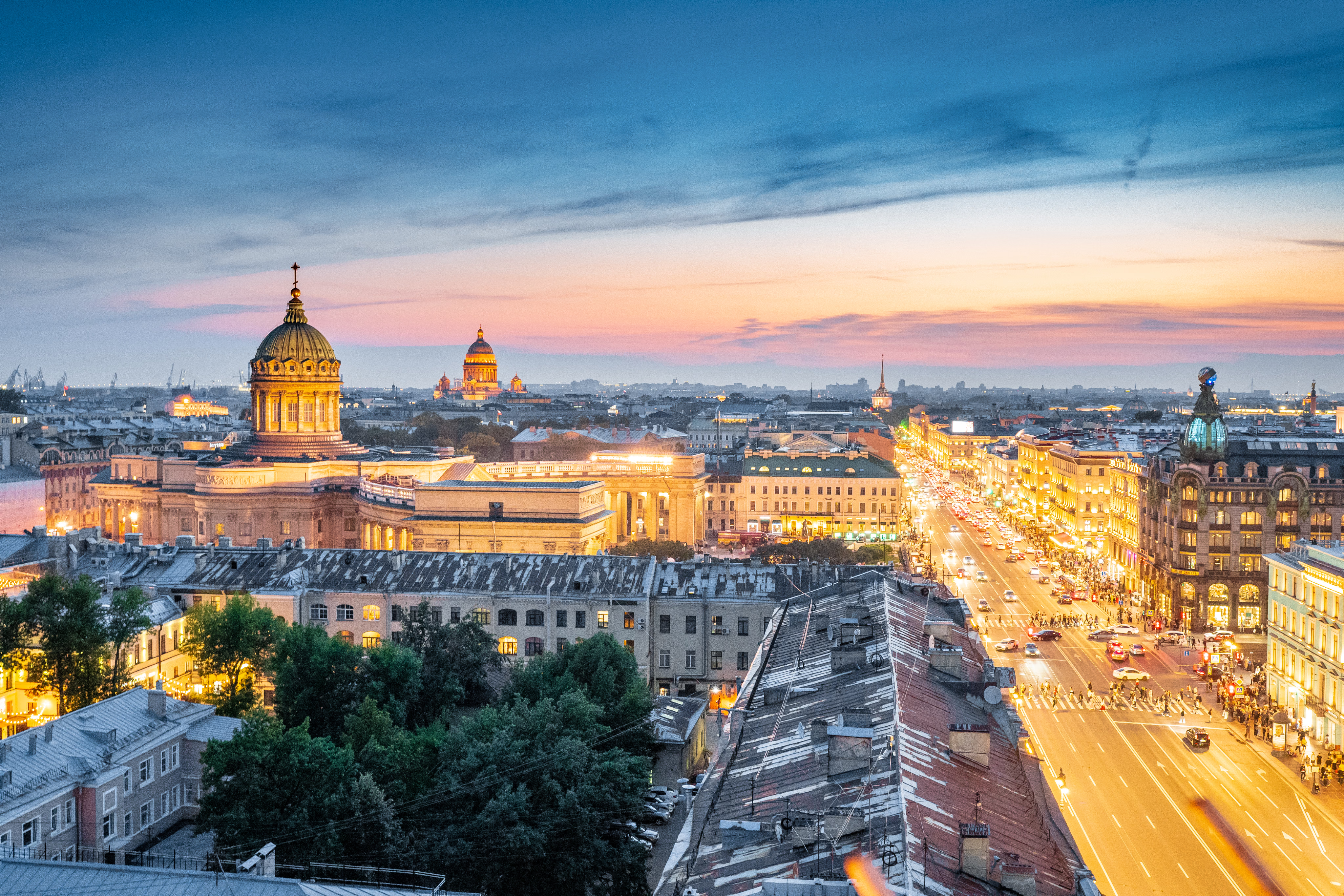
The Hermitage is not one building. It is a network scattered across the city, and several of the branches are quieter and, for some visitors, better.
- Main Complex — Palace Square 2. The Winter Palace and the Small, Old and New Hermitages. What everyone means by “the Hermitage”.
- General Staff Building — Palace Square 6–8, directly opposite. French Impressionism and Post-Impressionism, the Shchukin and Morozov collections, contemporary art. A fraction of the crowd, across the square.
- Winter Palace of Peter the Great — Palace Embankment 32. Peter I’s surviving personal rooms, workshops and cellars.
- Menshikov Palace — Universitetskaya Embankment 15, Vasilyevsky Island. The 1710s Baroque residence of the city’s first governor, remarkably intact.
- Imperial Porcelain Factory Museum — Prospekt Obukhovskoi Oborony 151. Russian porcelain from the imperial period through the Soviet era to now.
- Staraya Derevnya Restoration and Storage Centre — Zausadebnaya 37a. Open storage: the reserve collection, visible on its racks. Worth the trip out.
If you have two days, the honest recommendation is Main Complex on the first and General Staff Building on the second — not more of the Main Complex.
Go slowly
The mistake almost everyone makes is treating three million objects as a target. It isn’t one. Pick fifteen things, walk to them, and give the rest of your attention to the rooms themselves — the parquet, the malachite, the light coming off the Neva through windows the Romanovs looked out of.
Somewhere below you, a cat is asleep on a radiator, holding a post its family has held since 1745.